Humanity Returns: Artemis II Crew Splashes Down After Historic Lunar Voyage
A new chapter in space exploration has begun.
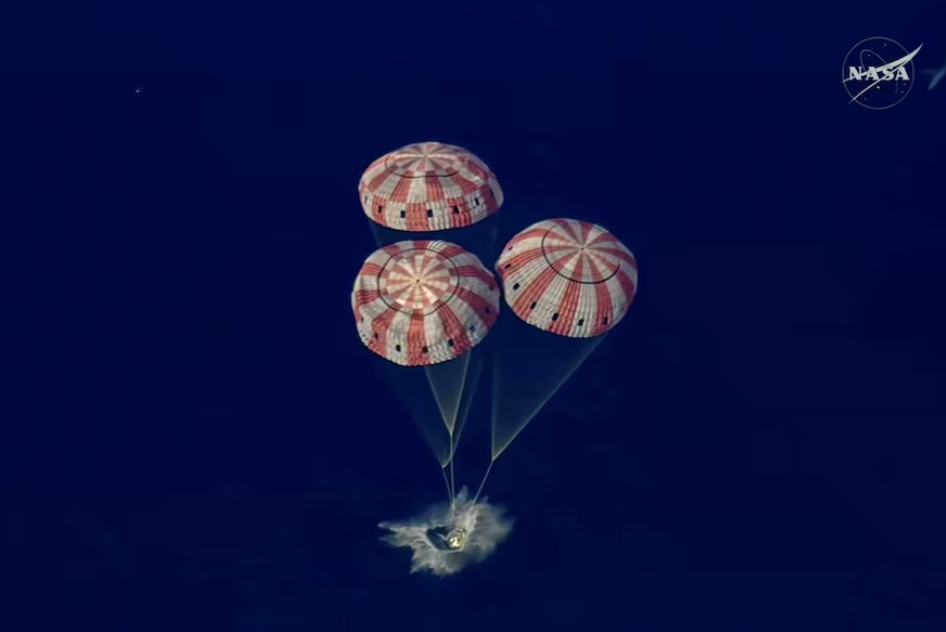
After a nearly 10-day journey that captivated the world, the four astronauts of NASA’s Artemis II mission have safely returned to Earth. Their Orion spacecraft, named “Integrity” by the crew, streaked through the atmosphere in a fiery descent before splashing down in the Pacific Ocean off the coast of California at 5:07 p.m. PDT on Friday. The successful conclusion of this mission marks the first time in over 50 years that humans have traveled to the vicinity of the Moon and back.
A Landmark Journey
The Artemis II crew, consisting of NASA Commander Reid Wiseman, Pilot Victor Glover, Mission Specialist Christina Koch, and Canadian Space Agency (CSA) Mission Specialist Jeremy Hansen, launched just over a week ago, embarking on a journey that took them farther from Earth than any humans since the Apollo era. The mission was more than just a flight; it was a critical test of the Orion spacecraft’s capabilities in the harsh environment of deep space.
This flight was filled with historic milestones. It made Victor Glover the first person of color and Christina Koch the first woman to fly on a lunar mission. Jeremy Hansen also became the first non-American to make the journey. During their voyage, the crew broke the record for the farthest distance humans have ever traveled from Earth and conducted essential tests on the spacecraft’s life support, propulsion, and navigation systems.
The Fiery Return
The mission’s final and most perilous phase was the high-speed reentry. The Orion capsule slammed into Earth’s atmosphere at over 32 times the speed of sound, generating temperatures on its heat shield of nearly 5,000°F (2,760°C) — about half as hot as the surface of the sun.
The capsule endured a dramatic 13-minute descent, creating a plasma layer that temporarily cut off communications with the crew. The successful performance of the heat shield was a crucial objective, especially after engineers noted unexpected damage following the uncrewed Artemis I flight. After the harrowing reentry, a series of parachutes deployed to slow the spacecraft to a gentle 17 mph for its splashdown.
A Vision for the Future
Recovery teams from the U.S. Navy and NASA were on standby to retrieve the crew and the capsule. The astronauts were extracted and flown by helicopter to the USS John P. Murtha for medical evaluations before their eventual return to Houston.
Artemis II is a cornerstone of NASA’s broader plan to establish a long-term, sustainable presence on the Moon. The data and experience gained from this test flight are invaluable as NASA and its international partners prepare for future missions, including landing astronauts on the lunar surface with Artemis IV, and eventually, sending humans to Mars. As NASA Administrator Jared Isaacman stated, “We are back in the business of sending astronauts to the moon, bringing them back safely and [are] set up for a series more.”